

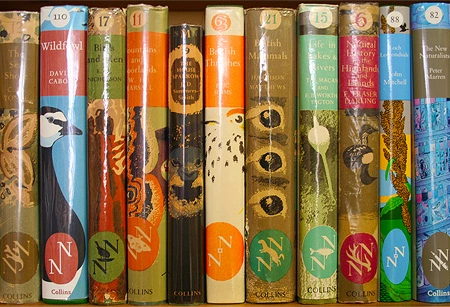
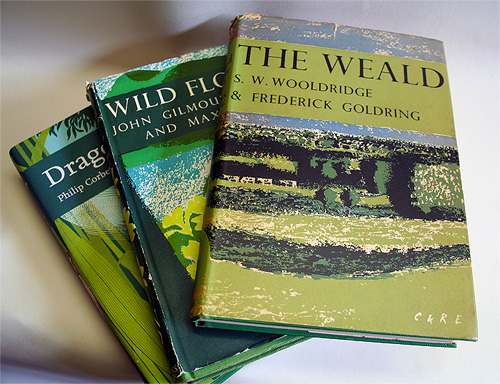
The first meetings in the development of the New Naturalist (NN) series took place in 1942, amidst the conflict of World War II. The books were described by Professor Sir (Laurence) Dudley Stamp as ‘a form of escapism’ and the series seen as optimistic in the assumption of the outcome of the war – that the British public would be free to read them, untroubled by any new Germanic regime.
The NN series came on the back of a subtle bit of Great British propaganda in the form of the ‘Britain in Pictures’ books; published from 1941. They promoted all aspects of British life on the back of the national pride that followed Dunkirk and the Battle of Britain in 1940; they were a collaboration between the publishing house Collins and the printing company Adprint.
Wolfgang Foges was director of Adprint; an Austrian refugee from the Third Reich, he had been a publisher in Vienna of the new contemporary continental style of illustrated book that carefully integrated image with text. Foges (who also initiated the King Penguin series) worked with Billy Collins to push forward the use of coloured photography in publishing with NN series.
Collins had a large allowance of paper as a manufacturer of Bibles and stationery, Adprint had the colour expertise. Foges travelled to America for supplies of a superior Kodachrome film, quarter-plate size, that was unavailable in the UK; all the bulk supplies and equipment required a special import licence which Adprint was able to obtain with the support of the British Council and Ministry of Information – suggesting a perceived value to wartime morale.
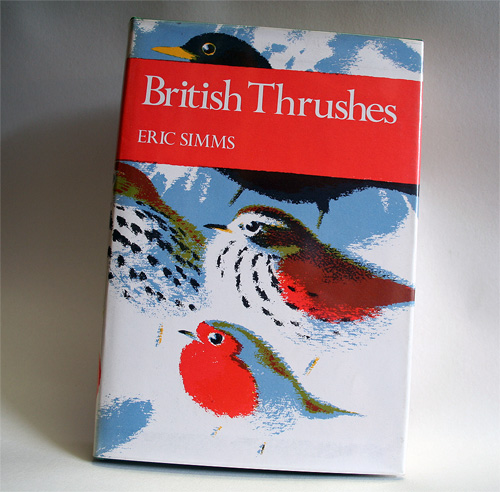
The original editors for the NN series were Julian Huxley, James Fisher, Dudley Stamp, John Gillmour and Eric Hoskin. Working collectively a decision was made on an author and subject; a synopsis was invited from the author to which each editor made adjustments, once this was accepted contracts were drawn up. The author would submit a specimen chapter and an editor would be assigned to work with the author through to fruition. The editor wrote the preface though this was nearly always unsigned.
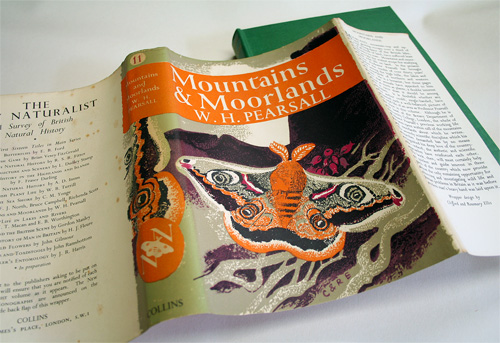
The wrappers are well known and were originally devised by Rosemary and Clifford Ellis. Art lecturers based in Bath; Clifford was Principal of the Bath Academy of Arts, Rosemary a member of the teaching staff. The editors of the series had been looking to use colour photographs for the covers, in keeping with the philosophy of the series – a belief that the public would welcome the latest scientific research, written by leading experts, if it were presented along side colour photographs of living plants and animals taken in the context of their environs (pre-1943 photographic natural history book illustrations were monochrome, the subjects were either dead or captive). Having had previous success with them at the publishers ‘Jonathan Cape’, the Ellis’ were approached and then championed by Ruth Atkinson, the Publicist at Collins. The potential for attracting sales with the dramatic impact of the Ellis’ artwork on the covers won over Billy Collins and they were commissioned with no further competition.
The printing work for the jackets was given to Thomas E. Griffiths of Baynard Press, expert in transcribing the work of artists using Lithography; then a relatively expensive process but the only one that could truly portray the vivid colours and true nature of the artwork. Economics still impacted on the designs though and there was limit of 4 colours placed upon them. Collins had been asking for as little as 2 colours and the Ellis’ as many as 8 so great demand was placed upon the ingenuity of artist and printer. They had to make best use of overlapping colours to produce additional hues and tones.
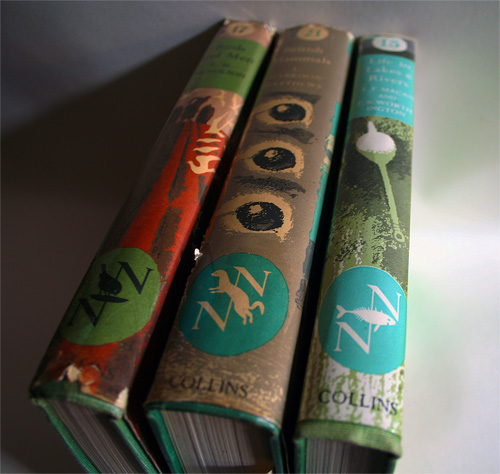
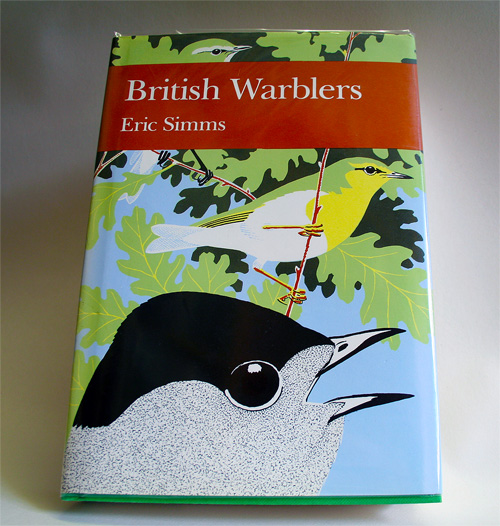
‘The Natural History of Orkney’ (no. 70) was the Ellis’ last cover released in 1985, the same year that Clifford Ellis died. Rosemary declined to work on the next title, ‘British Warblers’; since then they have been the work of Robert Gillmor. Gillmor is a successful bird artist that took on the mantle not to emulate the Ellis’ designs but to produce artworks that could sit along side them. His jackets do that and more, enhancing what is an ongoing series; the latest title to date is ‘Farming and Birds’ released in 2017.
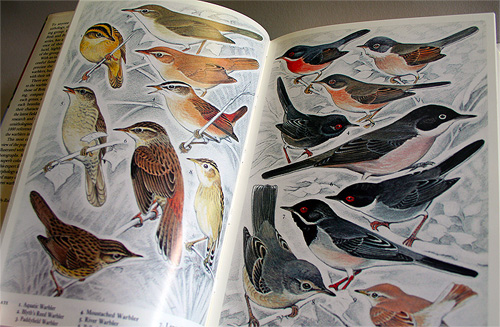
These wonderfully colourful volumes are beautiful, collectable and investable; they have become a commodity now like stamps and coins but unlike the latter they remain practical, offering rewards beyond the anticipation of the hunt and thrill of the catch. They retain the ability to transport the reader, exuberating the enthusiasm of the authors in a highly readable format that imparts both knowledge and inspires a lust for more.
Visit us, we usually have a good number of the New Naturalist series in stock at our shop, mostly uncatalogued.